Your brand doesn't exist inside ChatGPT. Here's the fix.
Stephan Ochse ·
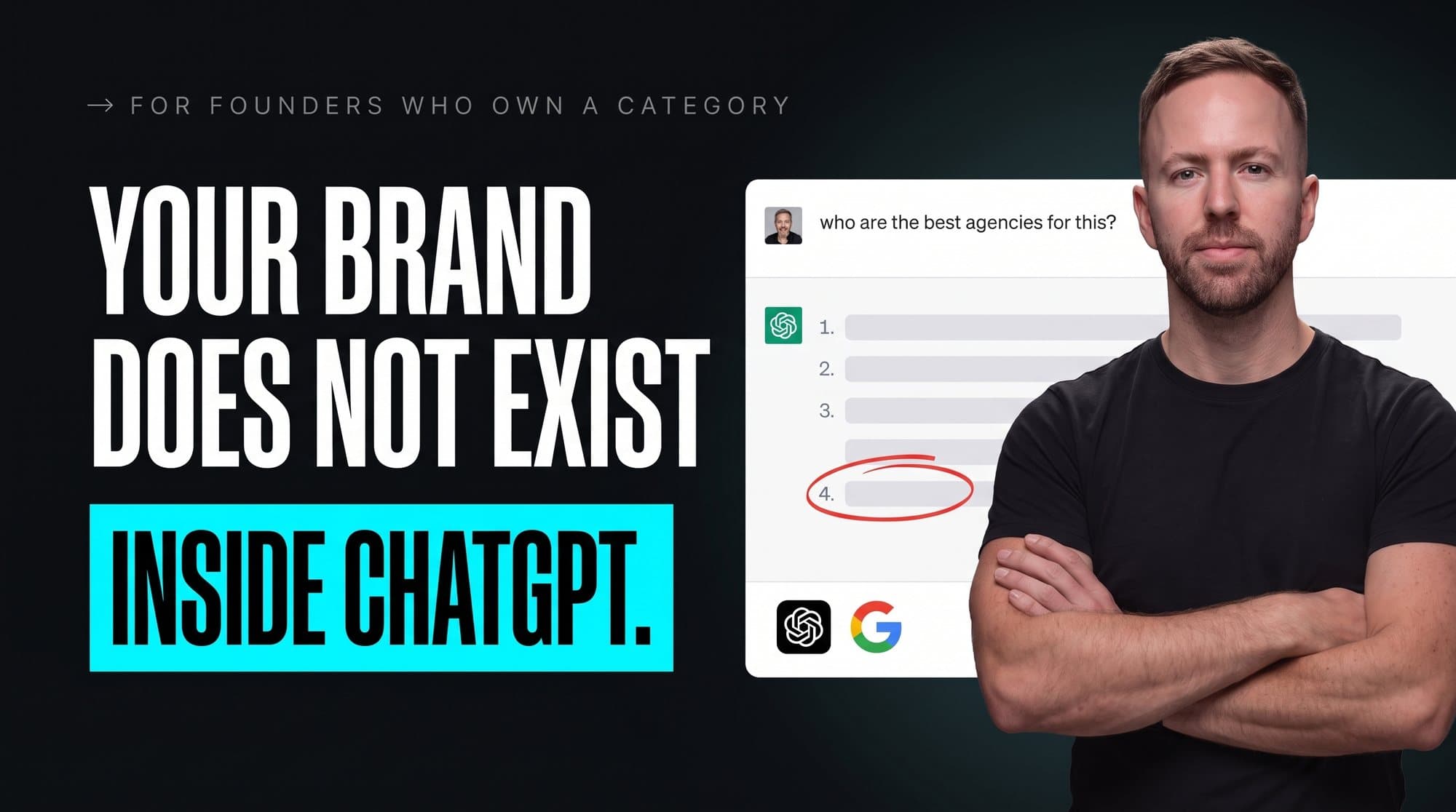
A founder I know typed his own company's category into ChatGPT last month. "Best inventory software for mid-size retailers." His product has better retention than anyone else in the space. It didn't show up once in ten prompts. A slower, clunkier competitor showed up in seven.
That's the entire problem in one search. Not a ranking drop. A disappearance.
I run paid media at $300k to $2.5M a month across 100-plus accounts, and for years the game was ranking on a results page a human scrolled through. That page is disappearing. Google now answers most category questions before a single blue link loads. ChatGPT, Perplexity, and Gemini answer the question and never show a link at all. If an AI engine doesn't cite your brand as part of its answer, you're not losing a ranking. You're invisible to the exact person who was ready to buy.
This edition is the system for fixing that: what GEO actually means, how to audit where you stand, what actually moves the needle, and what a founder still has to do by hand no matter how good the models get.
**GEO isn't SEO with a new name**
Search engine optimization was built for an index that ranks pages. Generative engines don't rank pages, they synthesize an answer from whatever sources they trust enough to cite. Ranking third for a keyword used to mean you'd get some fraction of the clicks. Not existing in an AI answer means you get none of them, because there's no scroll-past-the-top-three option anymore. The whole page is one answer, with three or four citations underneath it if you're lucky enough to be one of them.
The mechanism that decides who gets cited runs on different signals than classic SEO: structured data the model can parse without guessing, a clear entity presence (the same brand name and facts showing up consistently across your site, Wikipedia or Wikidata, review platforms, and third-party mentions), and content written in a way that answers a specific question directly instead of burying the answer under three paragraphs of preamble.
[IMAGE-1: Hyper-realistic split-screen illustration on an off-white background with emerald accents, left panel shows a Perplexity-style AI answer citing three named competitor brands with small citation footnote numbers, right panel shows the same query with a grayed-out empty citation slot and a question mark icon where a brand logo should be, clean dashboard-diagram style, no invented logos, generic placeholder brand marks only]
**The audit: five surfaces, one scorecard**
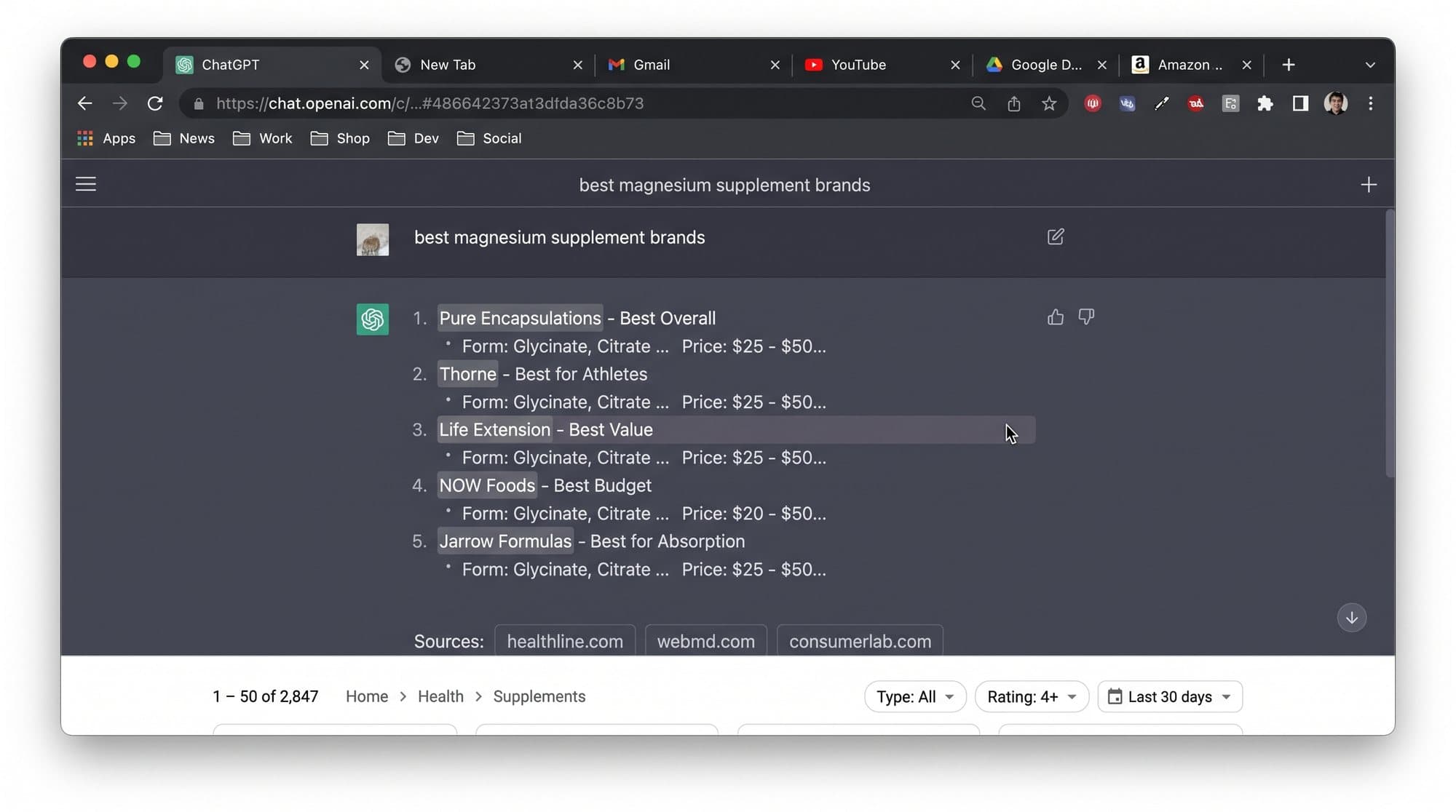
Before fixing anything, you need the actual gap measured, not guessed at. I run a standing check across the five surfaces that matter right now: Google AI Overview, ChatGPT with browsing, Perplexity, Gemini, and Copilot. Same twenty to thirty category questions run against every surface, every month. For each answer: is the brand cited at all, is it cited accurately, and how does the citation count compare to the two or three real competitors who show up instead.
Most founders have never seen this number for their own brand. One SaaS company I checked, roughly $18M ARR, sat at zero citations across all five surfaces for its core category question. Its nearest competitor, with objectively worse retention data, was cited in four of the five. That's not a content problem. That's an entity problem: the competitor's brand facts were structured and consistent everywhere a model looks, and this one wasn't.
[IMAGE-2: Hyper-realistic dashboard-style illustration, off-white canvas with emerald and navy accents, a central hub card labeled "Brand Entity" connected by curved lines to five labeled panels reading "Google AI Overview," "ChatGPT," "Perplexity," "Gemini," "Copilot," each panel showing a small citation-count badge, one panel highlighted in warning amber showing "0 citations," clean sans-serif labels, dense but legible information]
**What actually moves the citation count**
Three fixes account for most of the gap once you've measured it. First, structured data: schema markup that states plainly who you are, what you sell, and what makes you different, in a format a model parses without inference. Second, entity consistency: the same name, the same facts, repeated identically across your own site, your Wikidata entry if you have one, review platforms, and any third-party press or directory listing. Models cross-reference these sources to decide how much to trust a claim about you. Inconsistent facts read as low-confidence signal and get filtered out of the answer. Third, direct-answer content: a page that states the specific fact a category question is asking for in the first two sentences, not the fifth paragraph.
None of this replaces the SEO work already happening. It sits on top of it. The same technical foundation, the same content calendar, aimed at a different consumer: a model deciding who to cite instead of a person deciding who to click.
[IMAGE-3: Hyper-realistic screenshot of a Google AI Overview panel on a search results page, real Google logo and search bar chrome at top, the AI-generated answer paragraph in the middle with three small numbered citation footnotes underneath linking to named source domains, one footnote highlighted with a subtle warning-yellow outline and a small callout reading "entity match confirmed," clean and accurate to how Google's real AI Overview UI is laid out]
**A real result, ecom side**
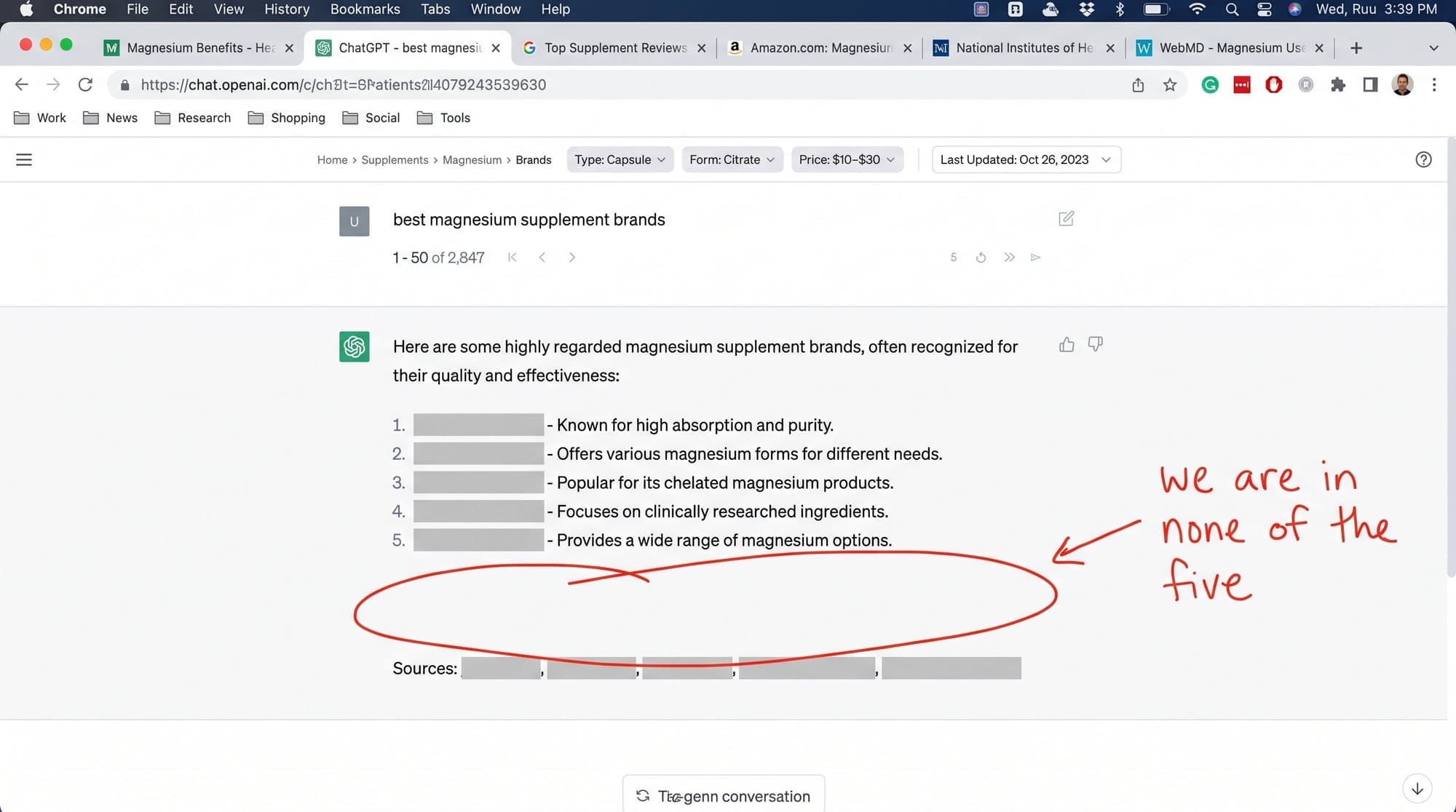
An apparel brand doing about $1.4M a month ranked second organically for its main category term and still had zero presence in the AI Overview for that same query. We ran the audit, found the entity signals were the gap (inconsistent product naming between the site and its Merchant Center feed, no Wikidata entry, thin review citations on third-party sites), and fixed all three over six weeks. The brand started showing up as a cited source in the AI Overview for that query within the following month, and the organic-attributed revenue tied to that query climbed alongside it. Same product. Same ad budget. The only thing that changed was whether the model trusted the facts enough to repeat them.
[IMAGE-4: Clean comparison bar chart illustration, off-white background with emerald and muted gray bars, two grouped columns labeled "Before" and "After" showing citation count per AI surface across the five surfaces from image 2, before bars mostly at zero or one, after bars in emerald showing three to four citations, simple axis labels, no invented company names, minimal and legible at small size]
**What stays a founder's call**
The audit tells you where you're invisible. It does not tell you what to say once you're visible. Deciding the two or three facts you want every AI answer to repeat about your brand, correcting a model when it cites something false about you, and deciding which category question actually matters to your buyer versus which one just sounds important: none of that gets automated, and none of it should. The system's job is surfacing the gap fast enough that a founder can spend the decision-making time on the parts that need a person, not on manually prompting five different chatbots every week to see if anything changed.
Next edition, I'm opening up the exact schema fields that move the needle first, the ones most sites get wrong even when they think they've done their technical SEO. If there's a piece of this you want opened first, reply and tell me. I read every one.
What to fix first, in order
The advice in this space is mostly noise, so here is the order that actually matters.
An entity page. One page that states plainly what you are, what you sell, to whom, where you operate and roughly what it costs. Assistants cannot recommend what they cannot describe, and "we help brands grow" describes nothing. This is the highest-leverage page you will write and it takes an afternoon.
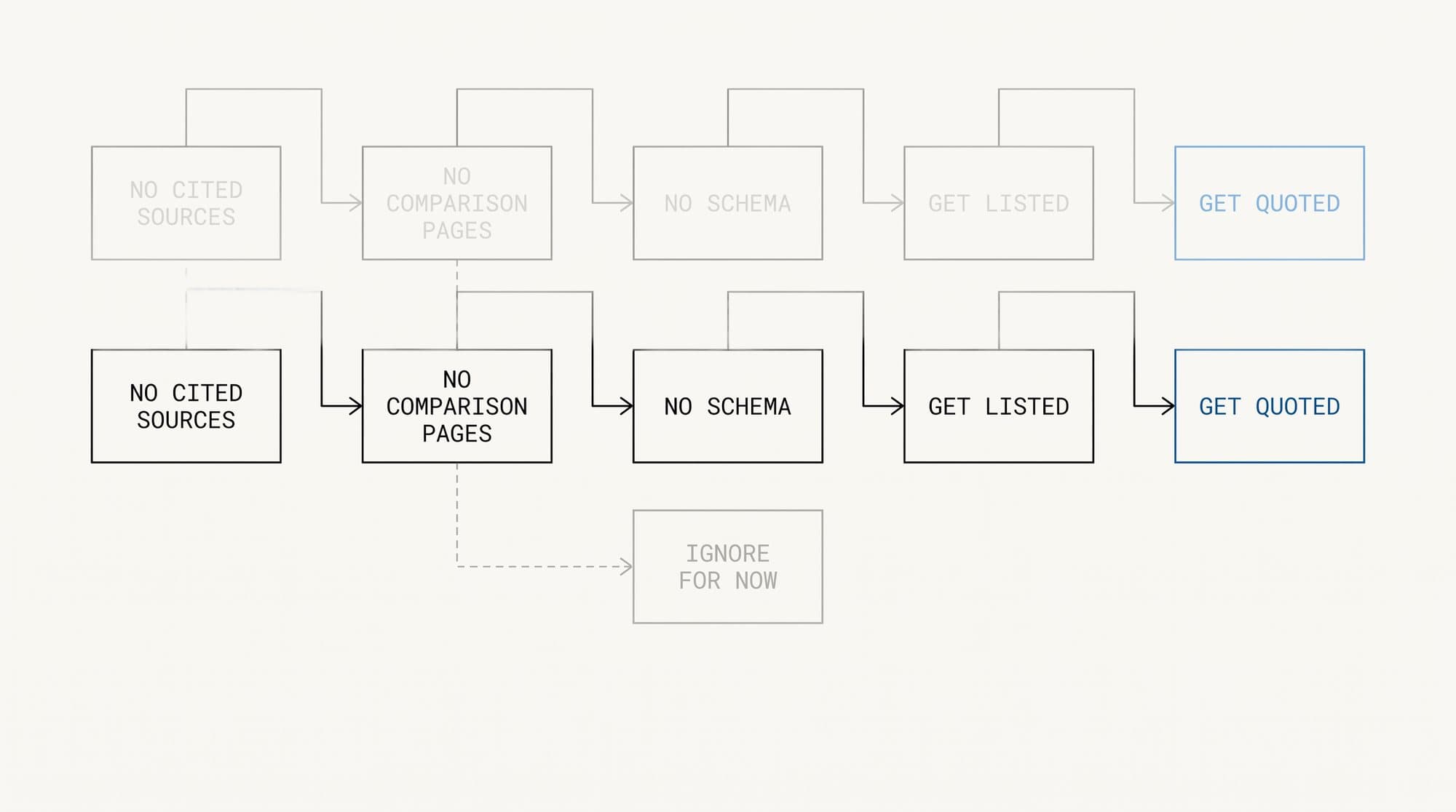
Third-party mentions. The model trusts sources about you more than it trusts you about you. Being named in comparisons, roundups and category directories moves your visibility further than anything you publish on your own domain. Volume of independent mentions beats polish of your own copy.
Structured data, filled properly. Organization, Product, FAQ and Review schema, completed rather than minimally present. Markup is read faster and more reliably than prose, and prose is where most businesses hide their facts.
Dates that are real. Stale pages lose to fresher ones on the same question. A changed date on unchanged content gets discounted, so update the content or leave the date alone.
The one people miss
Your product feed. For anything sold online, the assistant reads the same structured product data your shopping channel reads. Thin titles and copied descriptions make you invisible in a channel you are not measuring, using an asset you already maintain for a different reason.
How to tell whether any of it worked
There is no report, so you have to build the measurement yourself. Ask the six major surfaces the three questions your best customer asks before buying. Record whether you appear and who does instead. Repeat monthly. That log is the only visibility you are going to get, and it is enough to tell you whether the work is landing.