Forty rules with numbers in them. The whole list, by category.
Stephan Ochse ·
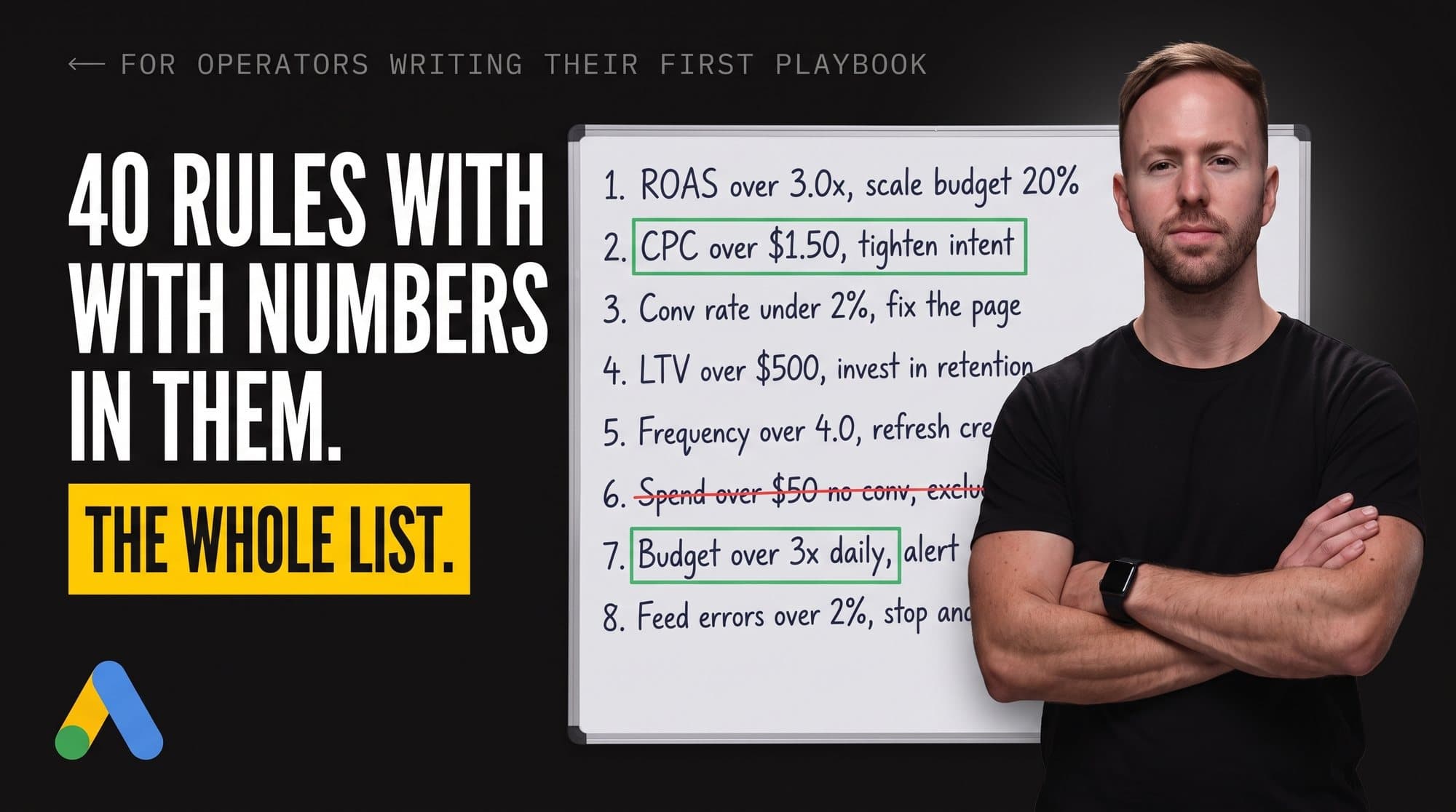
I counted every decision that reached me on a normal Tuesday. Thirty-one. Twenty-six were repeats: a refund threshold, a budget change, a client email that needed a yes. Decisions I had made before, arriving again in new clothes.
So I did the unglamorous thing. I wrote the decisions down as rules, forty of them, and handed the repeats to the people and systems that run them now. My desk kept the five that were new. That trade is why the business takes on more accounts without taking on more of my evenings.
[IMAGE-1: notebook page with a tally of 31 decision marks, 26 struck through in red, "26 repeats" circled]
The list took about a year, and almost none of it was interesting.
Why your calendar fills up
Nobody schedules meetings because they enjoy meetings. Meetings exist because information is trapped in one person's head and the only retrieval method anyone has invented is to book thirty minutes and ask.
So the real question is never "can we cancel this meeting." It is "why is this the only way to get that answer."
Ask it that way and most of a calendar falls apart on its own. A status meeting exists because nobody wrote the status down. A check-in exists because nobody knows who is allowed to decide. A kickoff exists because the brief is vague and everyone hopes the vagueness resolves itself if enough people sit in a room.
None of those are meeting problems. They are writing problems wearing a meeting costume.
The three moves that took the repeats off my desk
None of them were a productivity system. I have tried the productivity systems. They reorganise the symptoms.
The first was written updates that arrive whether or not anyone asks. Not a status meeting. A document that updates itself from the systems that hold the answer, read by whoever needs it, whenever they need it. The moment the update exists in writing, the meeting about the update has nothing to do.
[IMAGE-2: Slack project channel where the written weekly update ends with "Nothing needs a decision" and a single approval reaction]
The second was naming a decider for every recurring decision. Half of all standing meetings are a group of adults waiting to find out who is allowed to say yes. Write the name down once and the meeting dies without ceremony, and nobody misses it.
The third was a default of no. Every meeting request gets one question back: what decision are we making here. If there is no decision, there is no meeting. About a third of requests never come back after that question, which tells you what they were.
What i wrote down, word for word
This is the part people skip, so here is the concrete version.
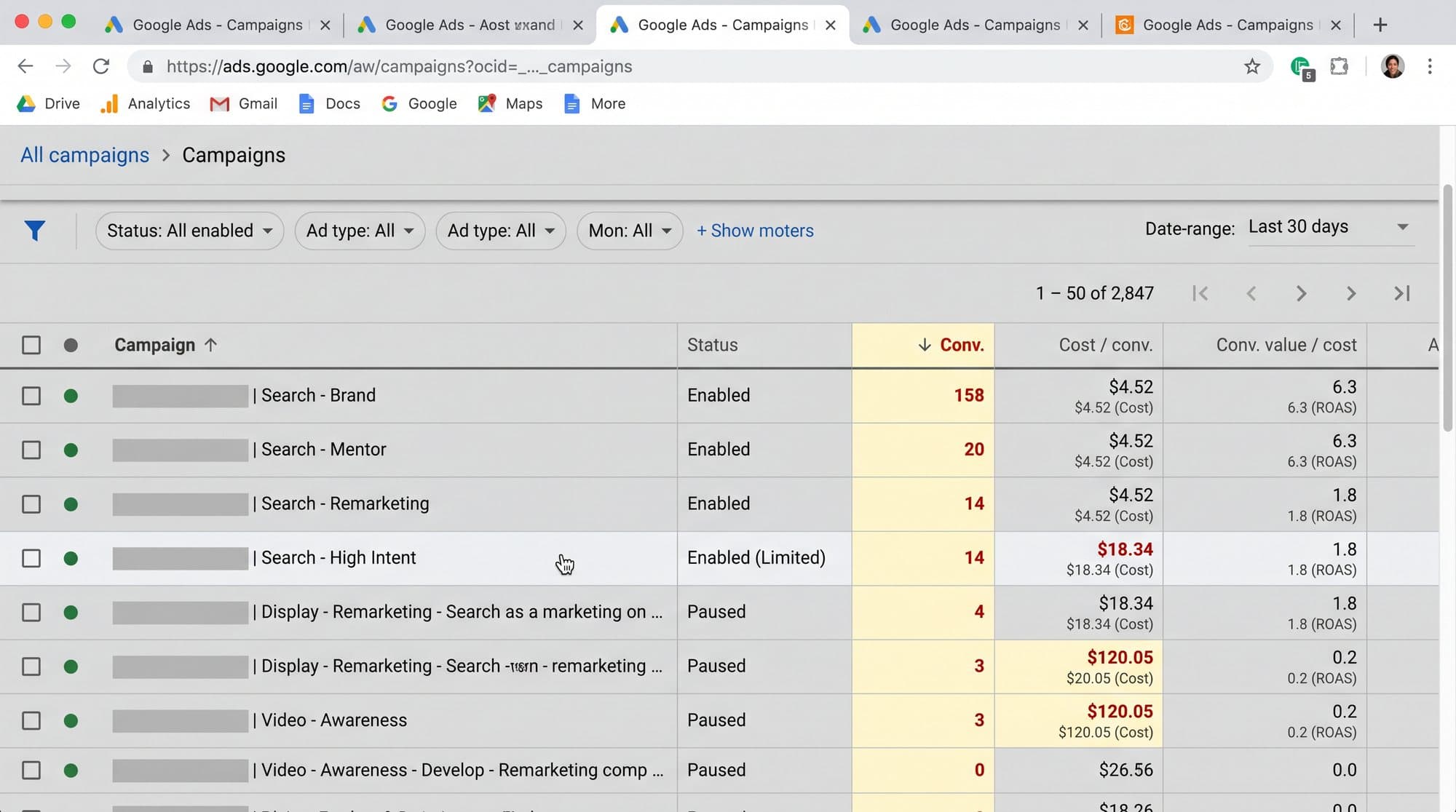
I opened a document and listed every question anyone had asked me in the previous month. Not tasks. Questions. "Can we refund this." "Should we pause this campaign." "Is this client worth keeping." "Can I approve this invoice."
Then I wrote a rule for each one. Not a process, a rule. A process describes steps. A rule describes a decision and its boundary.
"Refund anything under $80 without asking me" is a rule. "Handle refunds" is a wish.
"Pause any campaign that spends 3x its daily budget with zero conversions, and tell me after" is a rule. "Keep an eye on spend" is a wish.
The list came to about forty items. Some of those rules now run inside software. Some are a paragraph a human reads. The mechanism does not matter. Getting the decision out of my head and into a sentence somebody else can execute is the entire exercise.
[IMAGE-3: plain RULES.md file with campaign-spend, budget-change, and refund boundaries written as executable decisions]
Where the hours went
Here is the part nobody warns you about. When the repeats stop reaching you, the reclaimed hours ask what the business needs next, and that question has no comforting answer. Being busy with repeats is a complete identity. It answers "am I doing enough" without making you think.
I filled those hours with invented work twice before I got honest. Both times it felt important and moved nothing. What earned the hours in the end: the audit system that finds wasted spend before a human looks, the content machine, and the offer work that raises what a client is worth. Repeat decisions do not compound. That work does.
The forty rules, by category
People ask what forty rules looks like, so here is the real shape of the list. It sorts into five buckets and the proportions surprised me.
Money decisions came to eleven. Refunds under a threshold, discount approvals, when a client goes on hold for non-payment, what invoice size needs a second pair of eyes, which recurring costs auto-renew and which get re-approved. Every one of these had been coming to me, and every one had a boundary I could name in a sentence once I sat down to write it.
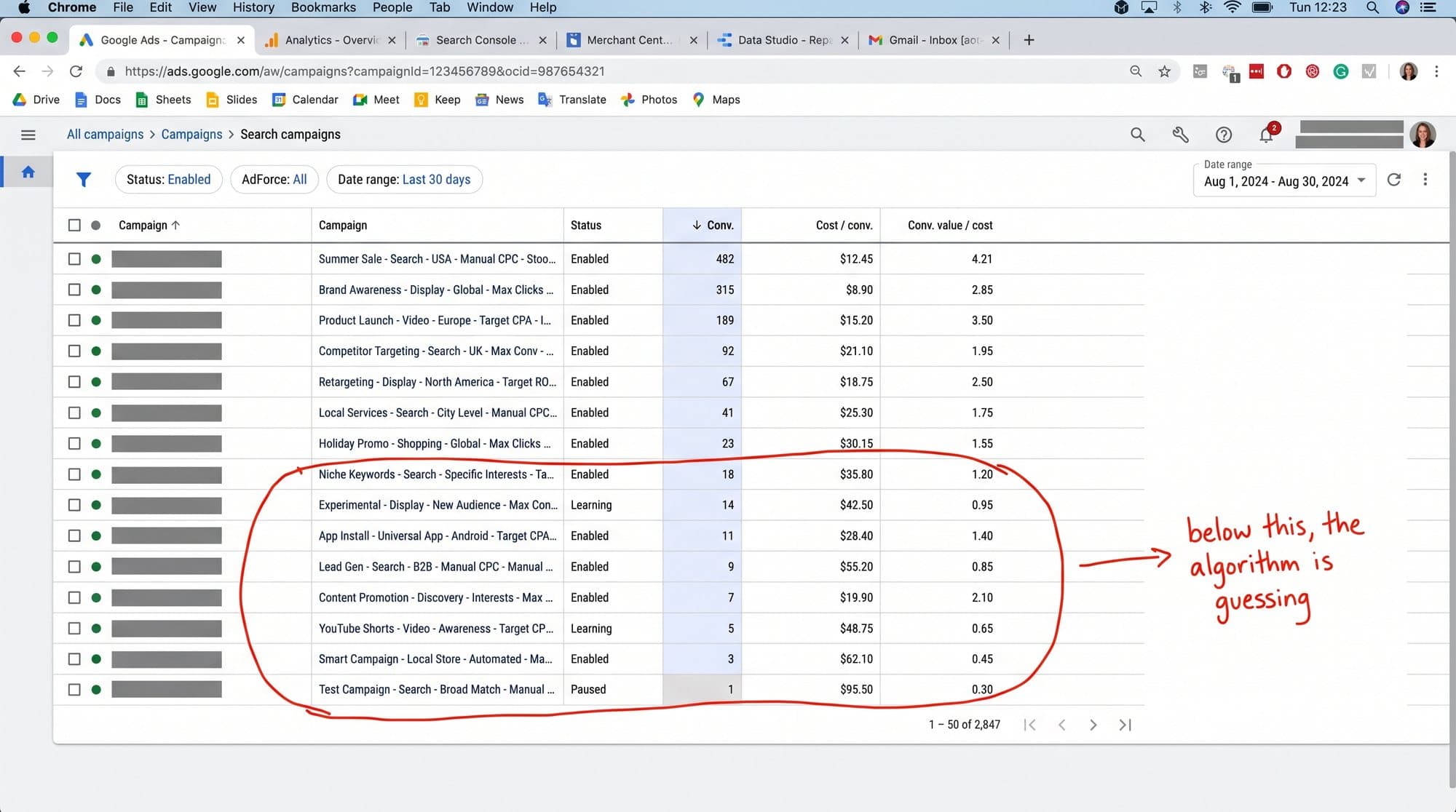
Client decisions came to nine. When to escalate, when to fire, what counts as scope creep, what we do when a client goes quiet for two weeks, who is allowed to promise a deadline.
Account and delivery decisions came to fourteen, the bucket everyone expects to be biggest, and it is. Budget change limits, what triggers a pause, what triggers a call, which checks run every night and which run once a week, what an alert has to contain before it is allowed to wake anyone.
Hiring and people decisions came to four. Small, but they were the ones I had been avoiding hardest, which is its own signal.
Everything else was two. Two. The long tail I had been imagining did not exist.
The boundary is the entire rule
The most common mistake I see when someone tries this is writing rules with no number in them.
"Escalate if the client seems unhappy" is not a rule. Seems unhappy according to whom, and at what point. "Escalate if a client sends two messages in a week that we have not resolved within 24 hours" is a rule. It is checkable by someone who has never met the client.
Every rule needs three parts: the trigger, the action, and the edge where it stops and comes back to a human. Drop the third part and you have built something that will do the wrong thing with total confidence at the worst moment, because you never told it where its authority ended.
I write mine in this exact shape, in one plain document rather than scattered across tools:
WHEN spend on any single campaign exceeds 3x its daily budget with zero conversions in 48 hours THEN flag it in the channel with the campaign name, the spend, and the last conversion date NEVER pause it, never change the budget, always wait for a reply
That third line took me longest to learn to write, and it is the one that lets me sleep.
How to test whether it worked
Two tests, both with numbers.
The Friday count. Run a normal week and tally every repeat decision that still reaches you. Each one is a missing rule or a broken one. My first count was 26. The current count is 3, and one of those 3 is new, which is the kind the desk is for.
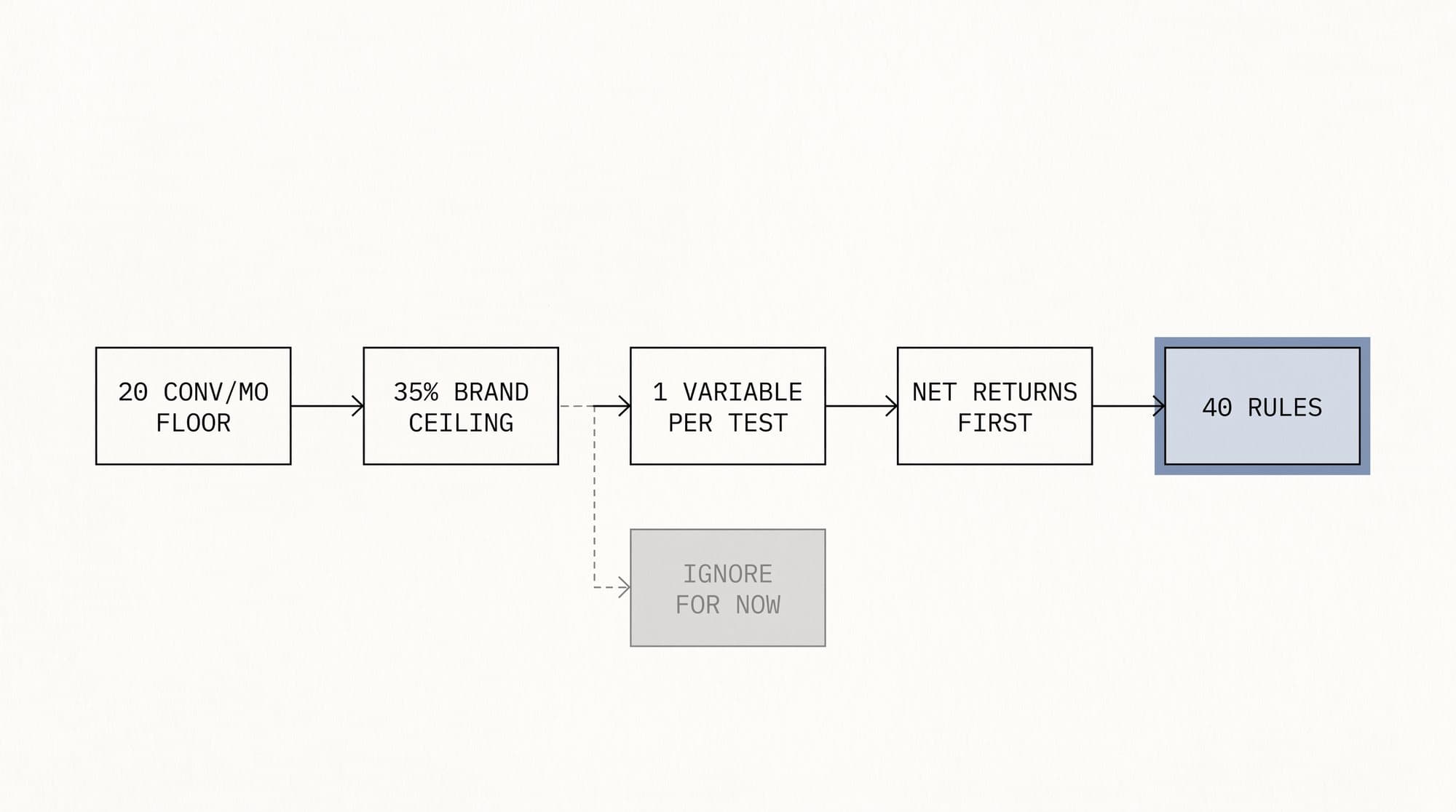
The load test. Add weight without adding hours: one more account, one more brand, one more campaign wave. If quality holds and the tally stays flat, the rules are carrying it. If your evenings absorb the difference, they are not. The first time I ran this, three things cracked, and all three were the same category: decisions nobody had permission to make. Not skill gaps. Permission gaps. That distinction changed how I wrote every rule afterwards.
Where this goes wrong
Two failure modes, both of which I hit.
The first is automating a decision you have not made. If you are inconsistent about something, writing it down does not make you consistent, it makes your inconsistency permanent and fast. Sit with the decision until you can defend the boundary before you hand it to anything.
The second is deleting the human check too soon because the system has been right for a month. A month is not evidence. The failures you care about are the rare ones, and rare things need quarters, not weeks, before you trust them unsupervised.
One last thing about delegation
Every article about this says "delegate more" and stops there, which is useless advice, because delegating a task you have not thought about moves the confusion to someone else and adds a status meeting to track it.
What transfers is a decision with a boundary. A task is the visible tip of a judgement you made without noticing, and handing over the tip leaves the judgement behind. Write the judgement down and the task follows on its own.
That is why the forty rules took a year and the tooling took a fortnight. Everyone wants the fortnight.
Three things to do this week
Tally the decisions that reach you for five working days. Mark every one you have made before. That number is the size of your missing rulebook.
Write down the five questions you get asked most. Turn each into a rule with a number in it. A rule without a boundary is not a rule.
Take your most expensive repeat and write it as WHEN, THEN, NEVER. Give it to the person who asked last time. Watch what happens to that question.