Every growth acronym in your inbox, translated into ROAS
Stephan Ochse ·
A founder I work with forwarded me a proposal last month: $7,500 a month, twelve-month minimum, for a "GEO and AEO retainer." That's $90,000 a year for two acronyms he couldn't define when I asked him to. His question to me was short. Is any of this real?
Some of it is real. Most of the invoice isn't. So this edition is a translation table: the three acronyms filling founder inboxes right now, each one run through the same five columns. What the term means in plain English. The playbook that does the work behind it. The question you ask before paying anyone for it. And the data, because I run paid media across 100+ accounts at $300k to $2.5M a month and I'd rather show you what the numbers say than argue about definitions.
[IMAGE-1: Clean flowchart-table infographic on a pure white background, the edition's main image, styled as a hard-gridded translation table with thin light-gray rules. Column headers across the top in bold charcoal uppercase reading exactly "TERM", "WHAT IT MEANS", "THE PLAYBOOK", "ASK YOURSELF", "THE DATA". Three rows: row one TERM cell shows "GEO" in a bright lime #D7F05A rounded highlight chip with charcoal text, WHAT IT MEANS cell reads "Getting cited inside AI answers", THE PLAYBOOK cell reads "Entity consistency + schema + direct-answer pages", ASK YOURSELF cell reads "Does ChatGPT say my name?", THE DATA cell reads "Under 2% of sessions. Doubling every quarter." Row two TERM cell shows "AEO" in a lime chip, WHAT IT MEANS reads "The older name for the same work", THE PLAYBOOK reads "FAQ blocks + question-shaped headings", ASK YOURSELF reads "Am I paying twice for one deliverable?", THE DATA reads "Every proposal we checked duplicated GEO line items." Row three TERM cell shows "AIO" in a lime chip, WHAT IT MEANS reads "Google's AI Overviews on your money queries", THE PLAYBOOK reads "Track your top 20 revenue queries monthly", ASK YOURSELF reads "Which paying queries trigger an Overview?", THE DATA reads "When an Overview shows, organic clicks fall first." A few load-bearing phrases inside cells get smaller lime underline accents, one small emerald checkmark icon beside each PLAYBOOK cell, generous white space, flat design, no gradients, no logos, no border, all visible text real correctly spelled words, no people, no faces, bottom tenth of the frame left clean for the footer composite.]
**Row one: GEO**
GEO stands for generative engine optimization: the work of getting your brand named inside the answers ChatGPT, Perplexity and Gemini give when someone asks a question in your category. Covered the full playbook in an earlier edition, so here's the compressed version. Models cite brands whose facts are structured and consistent everywhere they look: your site, your schema markup, review platforms, third-party mentions. Inconsistent facts read as noise and get filtered out of the answer.
The honest data point, from our own tracking: AI-referral sessions (traffic arriving from chatgpt.com, perplexity.ai and friends) sit under 2% of tracked sessions across the accounts where we measure it. Small. But the segment has roughly doubled each quarter we've watched it, and it converts above site average, because someone who clicked through from an answer already got pre-sold by the answer. Small and compounding beats big and flat. That's the case for doing the work. It is not the case for a $7,500 retainer, because the work is mostly one-time cleanup plus a monthly scorecard.
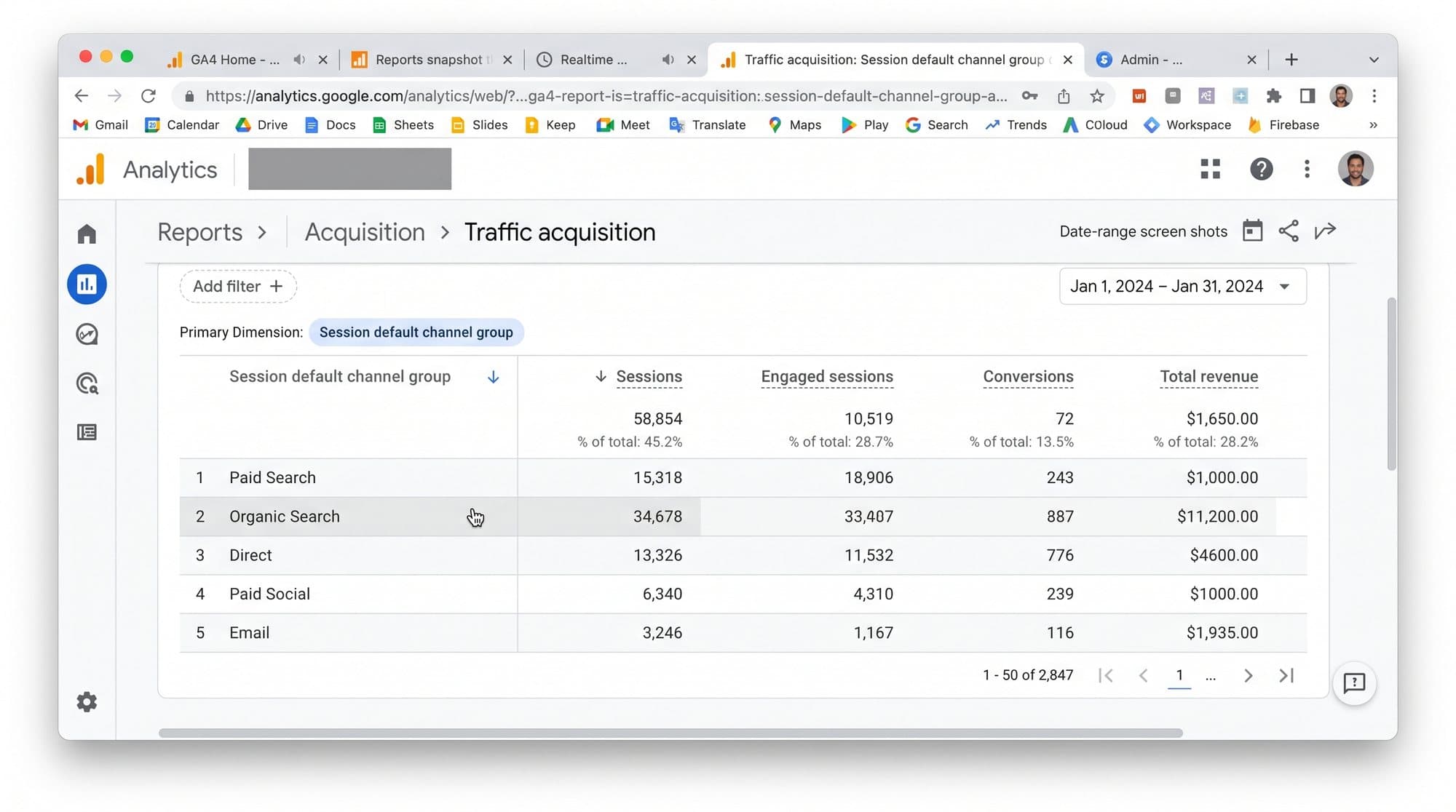
[IMAGE-2: Hyper-realistic screenshot of the Google Analytics 4 web interface, real GA4 left navigation and header chrome with the GA4 logo mark, the Traffic acquisition report open showing a session source/medium table with rows reading "chatgpt.com / referral", "perplexity.ai / referral", "gemini.google.com / referral" among other soft-gray-blurred rows, a Sessions column and a "Session key event rate" column visible with the AI referral rows showing modest session counts but a visibly higher event rate than the table average, property name and account identifiers covered with soft gray gaussian blur bars, a single lime #D7F05A rounded annotation chip pinned to the right of the chatgpt.com row with a thin charcoal connector line, chip text reading exactly "small. doubling. converts above average.", every visible UI label real and correctly spelled, unimportant chrome rendered as soft gray bars, no border, no people, no faces, bottom tenth of the frame left clean for the footer composite.]
**Row two: AEO**
AEO is answer engine optimization, and here's the translation nobody selling it wants printed: it's the older name for most of the same work. The term comes from the featured-snippet era, when the game was getting Google to quote your paragraph in position zero. The playbook was direct-answer blocks, FAQ schema, headings shaped like the questions people ask. That playbook didn't die. It got absorbed. The same structure that won snippets is most of what earns citations in generative answers.
Which means the question for row two isn't whether AEO works. It's whether you're being billed twice for one deliverable. In every dual-acronym proposal I've reviewed this year, the AEO line items were the GEO line items wearing a different heading. Same schema work, same content restructure, listed twice, priced twice. If a proposal charges you for both, ask the vendor to name one deliverable that appears under AEO and not under GEO. Watch what happens.
**Row three: AIO**
AIO in most inboxes means Google's AI Overviews: the answer block that now sits on top of the results page you already fight for. This one earns different treatment, because it lives on the exact queries your revenue comes from. When an Overview triggers on a money query, clicks to the classic organic listings fall first and hardest. On several non-brand queries in our book, paid clicks held up better than organic did after Overviews arrived, which is a sentence that should reframe how you think about your SEO line and your ads line as one budget.
The playbook is narrow and cheap: list your top 20 revenue queries, check monthly which ones trigger an Overview, check whether you're cited when it does, and correct any wrong fact the Overview repeats about your brand. That's a scorecard, not a retainer.
**The ROAS lens, applied to all three**
Here's how any acronym proves itself in my world. Segment the AI-referral traffic in GA4. Tag the revenue those sessions produce, measured at conversion time like everything else. Put that number next to what the work costs. A $7,500 monthly retainer needs a visible path to $7,500 in tracked monthly margin, or it's a brand bet, and brand bets are fine when you choose them on purpose and poison when they're sold to you as performance.
Run the founder's proposal through that lens and the verdict writes itself: the cleanup work was worth doing once, the scorecard was worth an afternoon a month, and the retainer was worth declining. He kept the $90,000.
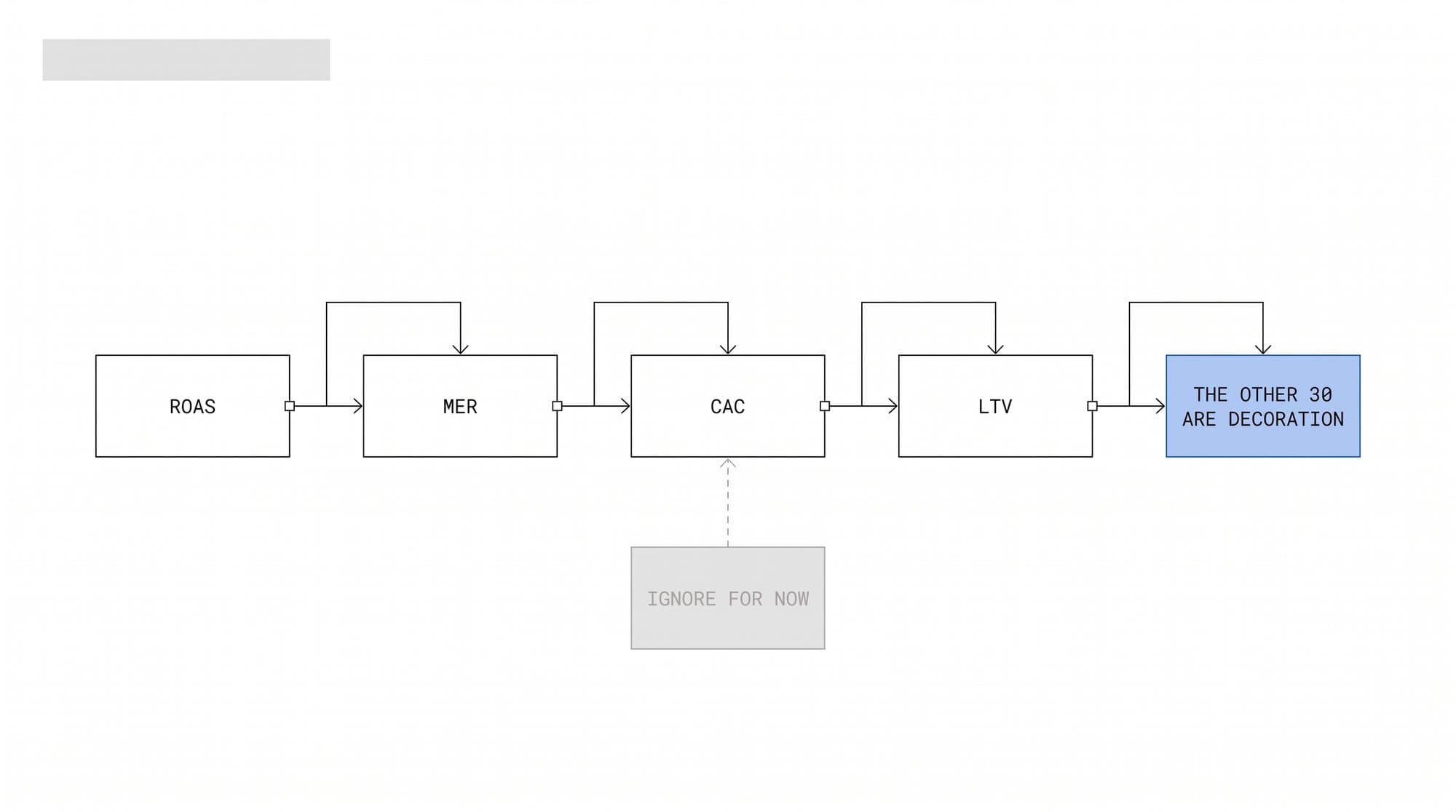
[IMAGE-3: Clean decision-flowchart infographic on a pure white background matching the edition's table style, titled in bold charcoal reading exactly "SHOULD YOU PAY FOR THE ACRONYM?", a vertical flow of rounded rectangle nodes connected by thin charcoal arrows: top node reading "Can the vendor name the deliverable in plain English?", branching "NO" arrow to a red-tinted terminal node reading "Decline", "YES" arrow down to a node reading "Does the work overlap what your SEO already covers?", branching "YES" to a terminal node reading "Pay once, not monthly", "NO" arrow down to a node reading "Can you measure it in conversion-time revenue?", branching "NO" to a node reading "It's a brand bet. Choose it on purpose.", "YES" to a final lime #D7F05A highlighted terminal node reading "Pilot it for 90 days. Then re-read the data." Small lime chips on the two YES path labels, flat design, generous white space, no gradients, no logos, no border, all visible text real correctly spelled words, no people, no faces, bottom tenth of the frame left clean for the footer composite.]
**The acronyms that didn't earn a row**
You'll meet others. SGE was Google's old name for what became AI Overviews, so any proposal still selling "SGE optimization" is dated on its own cover page. LLMO and GAIO are GEO wearing regional costumes, same deliverables, different conference circuit. The test from the flowchart covers all of them: plain-English deliverable, no overlap with work you've already paid for, measurable in conversion-time revenue. An acronym that can't pass three questions doesn't get a budget line, whatever it stands for.
One setup note before you can measure any of this, because the measurement is the part everyone skips. Build a GA4 segment for AI referrals once: session source matching chatgpt.com, perplexity.ai, gemini.google.com, copilot.microsoft.com. Mark it against your key events and revenue. That single segment is the scoreboard every claim in this edition gets checked against, and it costs ten minutes.
**What I'd do this quarter if I ran your brand**
Ninety minutes, no invoice. Run your 20 most valuable category questions through ChatGPT, Perplexity and Google yourself, once, and write down where you're named and where you're absent. Fix the facts that are wrong about you anywhere a model looks. Add direct-answer blocks to the five pages that earn your money. Then set a calendar reminder to re-run the same 20 questions in 90 days, and let the delta tell you whether this deserves more of your attention or less.
Next edition is a working tour: the five windows open on my machine while agents run the book, screenshot by screenshot. If there's an acronym I didn't translate here, reply with it. Enough replies on the same one and it gets its own row next time.